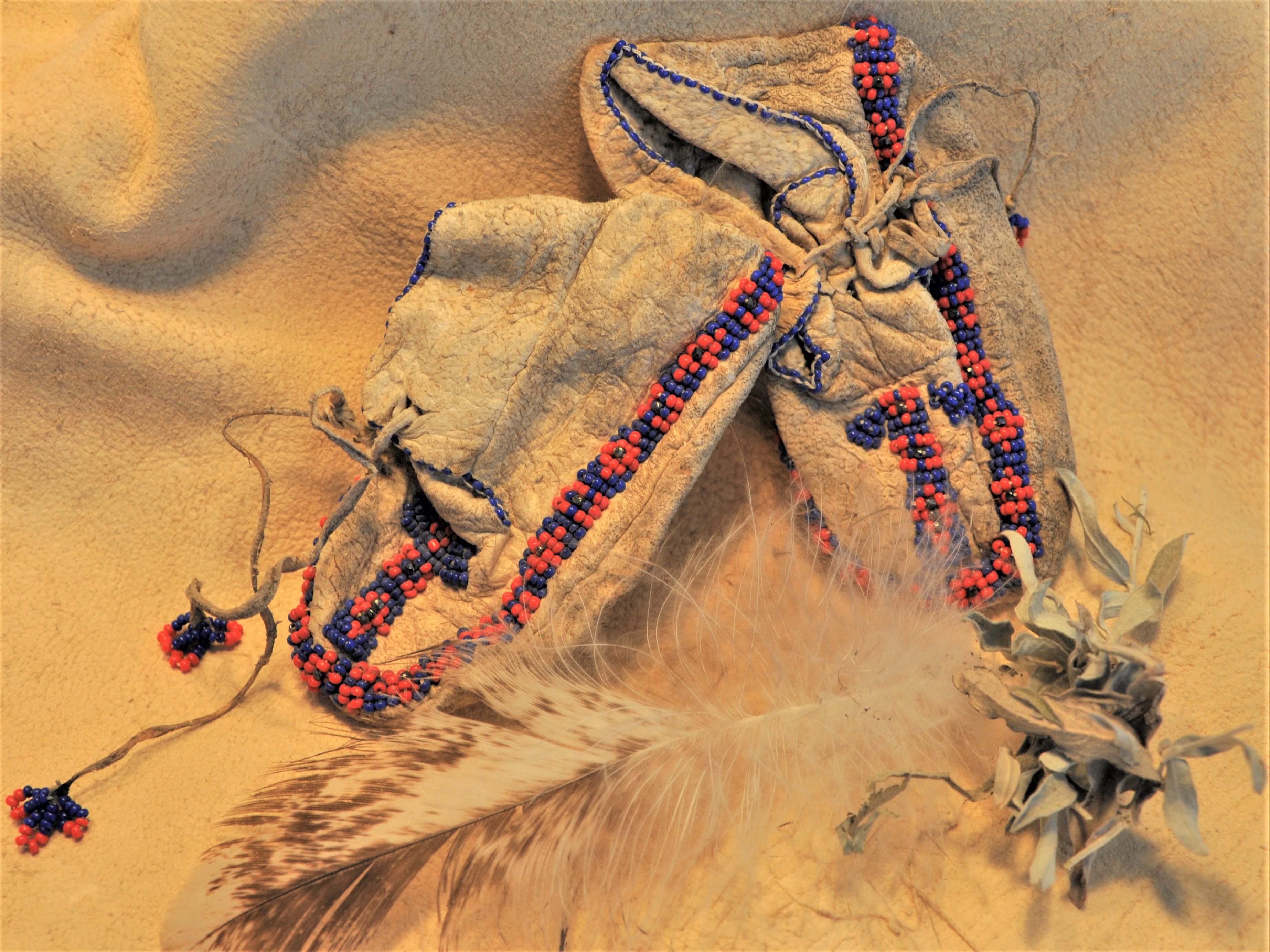

Ocheti Sakowin
The Seven Council Fires of the Dakotah (Eastern Dakotah), Lakotah and Nakotah (Western Dakotah) Oyates. The fires are representative of the Seven Oyates (the people of our nation) of the Ocheti Sakowin.
The Seven Oyates are matriarchal, spiritual land-based cultures created through our spiritual origins that exist through our Creation Stories. The Seven Oyates mirror the underlying values and practicesof Mitakuye Oyasin and matriarchal patterns that are socially egalitarian (relating to or believing in the principle that Mitakuye Oyasin, all relatives, are equal and deserve equal rights and opportunities), and a governance based on consensus decisions.
“The Lakota were self-governors, and the rules and regulations that governed the conduct of people and established their duties as individuals, families and bands came from a great tribal consciousness…The Lakota word for this governing power of custom or tradition is wouncage, literally, ‘our way of doing’. Wouncage constituted, for the Lakota people, the only authority. The manners of neighbor people might be similar, just alike in some respects or totally different, but, for the Lakota there is only the ways of their people-could only be ‘our way of doing’. Therefore, it was hard for a person to get away from woncage. In other words, it is harder to break laws than to keep them. Consequently, there were few “lawbreakers”.” -Luther Standing Bear, Sicangu/Oglala Lakota
Treaties Matter
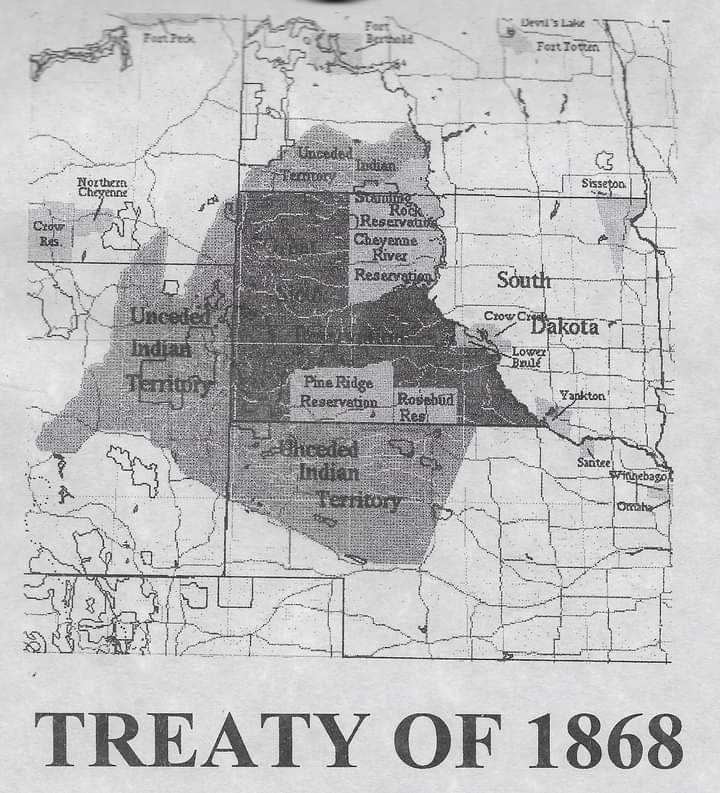
Today, treaties continue to affirm the inherent sovereignty of American Indian nations. Tribal governments maintain nation-to-nation relationships with the United States government. Tribal nations manage lands, resources, and economies, protect people, and build more secure futures for generations to come.

ILTF
The Indian Land Tenure Foundation is a national, community-based organization focused on American Indian land recovery and management.
Our Mission: The Indian Land Tenure Foundation (ILTF) is a national, community-based organization serving American Indian nations and people in the recovery and control of their rightful homelands. We work to promote education, increase cultural awareness, create economic opportunity, and reform the legal and administrative systems that prevent Indian people from owning and controlling reservation lands.
Papal Bulls of the Roman Catholic Church
Papal Bull, in Roman Catholicism, is an official letter or document. By the 13th century the term papal bull was used for only the most important documents issued by the pope. The papal bulls that directly affected Indigenous spiritual land-based culture in North America include 1452, 1453, 1455, 1493 and 1553.
The papal bull of 1453 Inter Caetera or The Doctrine of Discovery stated that any land not inhabited by Christians was available to be “discovered,” claimed, and exploited by Christian rulers and declared that “the Catholic faith and the Christian religion be exalted and be everywhere increased and spread, that the health of souls be cared for and that barbarous nations be overthrown and brought to the faith itself.
The papal bull of 1537 Sublimis Deus repudiated The Doctrine of Discovery, a year later this papal bull was rescinded.
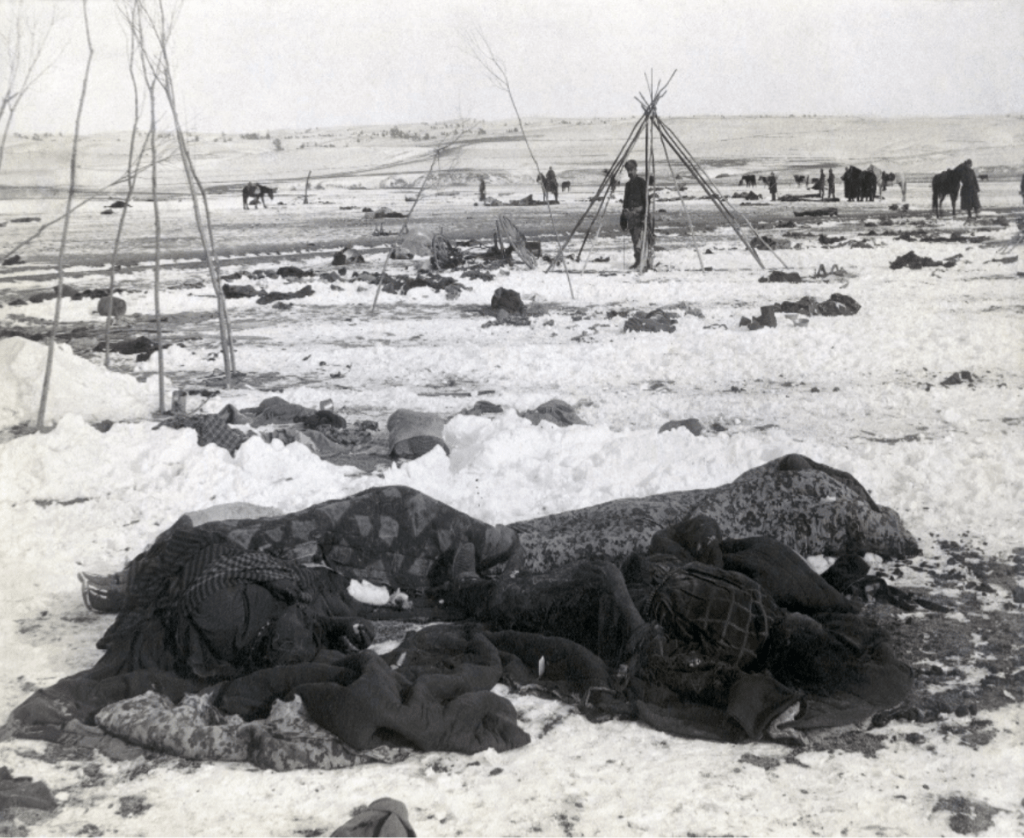
In January 1891, the bodies of four Lakota Sioux are seen wrapped in blankets, three weeks after the Dec. 29 massacre by U.S. forces at Wounded Knee River on the Pine Ridge reservation in South Dakota (Library of Congress)
 The Moccasin Telegraph